The short answer
There is no single best period for every Moroccan route. Spring and autumn can reduce some heat and cold trade-offs, but forecasts, mountain access, desert wind, daylight, holidays, crowds and prices vary. Check current official conditions for every stop.
Morocco spans Atlantic and Mediterranean coasts, Atlas elevations, desert areas and inland plains. A date that reduces one risk can increase another, so compare the exact route and activity rather than rating a month for the whole country.
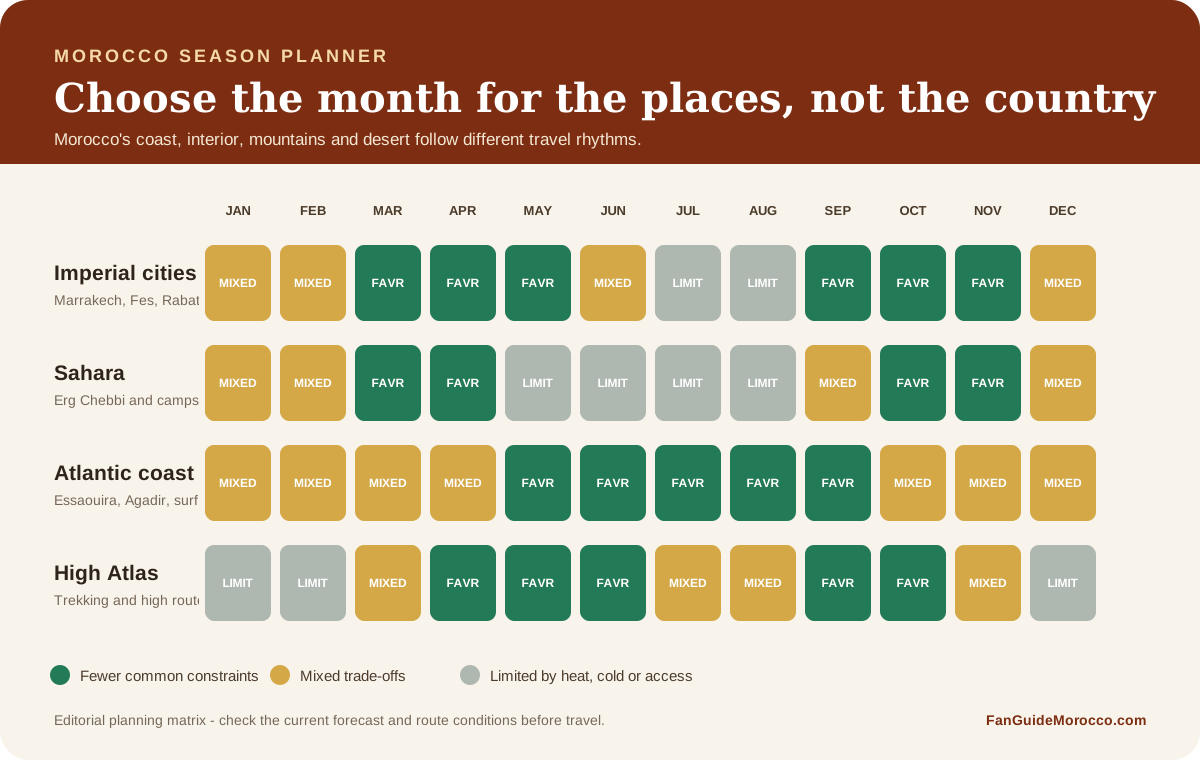
Season by season
Spring (March–May) — changing regional conditions
Spring can suit mixed city, lower-mountain and desert itineraries, but temperatures, rain, snowmelt, school holidays and religious dates vary. Check forecasts and access for the exact route rather than assuming one season fits every region.
Summer (June–August) — heat and regional differences
Inland and desert heat can be dangerous, while Atlantic wind and temperature patterns differ by location. Use current meteorological and health advice, and do not assume the coast or mountains are safe or comfortable without checking conditions.
Autumn (September–November) — changing regional conditions
Autumn may reduce peak inland heat, but heat, rain, wind and mountain conditions still vary. Check the current forecast and route access before combining cities, desert and mountains.
Winter (December–February) — rain, cold and snow trade-offs
Winter conditions differ across the coast, cities, desert and mountains. Check rain, wind, temperature, snow, road and trail access for each stop; do not assume sun, low crowds or open passes from the month alone.
Month by month
| Month | Weather & what it's good for |
|---|---|
| January | Check current rain, cold, wind, snow, road access and desert night temperatures. |
| February | Check current rain, cold, wind, snow, road access and flowering conditions. |
| March | Transitional conditions: check city forecasts, desert night temperatures and mountain access. |
| April | Conditions vary by region; check current rain, heat, mountain access and holiday demand. |
| May | Check current heat, rain, trail access and holiday demand by region. |
| June | Check inland heat, Atlantic wind, mountain conditions and confirmed festival dates. |
| July | Assess heat risk for every inland, desert and mountain activity; use current official warnings. |
| August | Assess heat, sea conditions, traffic and accommodation availability for the exact destination. |
| September | Late-summer conditions vary sharply between coast, inland cities, desert and mountains; compare regional forecasts. |
| October | Conditions vary by region; check current heat, wind, rain, trail access and event dates. |
| November | Check current rain, cold, desert wind and mountain access by region. |
| December | Check holiday demand, rain, cold, desert nights, snow and road access. |
Best time by region
- Imperial cities: compare current heat, rain, daylight and holiday demand for the exact city and date.
- The Sahara & Merzouga: check current heat, cold, wind and visibility plus the operator's thresholds and cancellation policy.
- Atlantic coast: check current wind, temperature, sea warnings and water conditions for the exact beach.
- High Atlas & trekking: check current snow, heat, storms, trail and refuge status with a qualified guide.
- The Rif & Chefchaouen: check current rain, mist, heat, trail access and daylight; mountain weather can change quickly.
Best time by activity
- City sightseeing: compare current heat, rain, daylight, access and holiday dates.
- Desert activities: check current conditions and the operator's written thresholds for every date.
- Beach & swimming: follow current weather, sea warnings and lifeguard guidance.
- Mountain trekking: use a qualified guide and current route, snow, storm, heat and refuge information.
- Surfing: match the current swell, wind, tide and break to your assessed ability.
- Kitesurfing/windsurfing: use a qualified instructor and current local wind and sea forecast.
- Crowds: check current holidays, events and accommodation availability rather than assuming a quiet month.
Crowds & costs
Crowds and prices vary by city, property, event, holiday and booking terms. Compare current like-for-like quotes and refundable options across dates rather than relying on a general seasonal label.
Visiting during Ramadan
Ramadan dates follow the lunar calendar, and business hours and services may change. Check the officially announced dates and current hours with each accommodation, transport operator, attraction and restaurant. Follow local law and venue guidance rather than relying on a general etiquette rule.
Frequently asked questions
What is the best time to visit Morocco? +
There is no single period for every route. Spring and autumn can reduce some heat and cold trade-offs, but check current forecasts, route access, daylight and holiday dates.
What is the hottest month in Morocco? +
Summer heat can become dangerous inland and in desert areas, while the Atlantic coast has different wind and temperature patterns. Use Morocco's current meteorological forecast and health advice for the exact destination.
When is the best time to visit the Sahara? +
Sahara heat, cold, wind and visibility vary within every month. Check Morocco's current meteorological forecast and the operator's written thresholds, route and cancellation policy.
What is the cheapest time to visit Morocco? +
Prices vary by route, property, event, demand and booking terms. Compare current like-for-like quotes across several dates; a season label does not guarantee a lower price.
Is it worth visiting Morocco in winter? +
Winter can fit some trips, but conditions differ across the coast, cities, desert and mountains. Check current rain, wind, temperature, snow, road and trail access for each stop.
Should I avoid Morocco during Ramadan? +
You don't need to avoid it, but plan around it. During Ramadan many restaurants close in daylight hours, some sights keep shorter hours, and the daytime pace slows, while evenings come alive after the fast. It can be a fascinating time to visit if you're respectful and discreet during the day. Ramadan shifts about 11 days earlier each year, so check the dates before booking.